

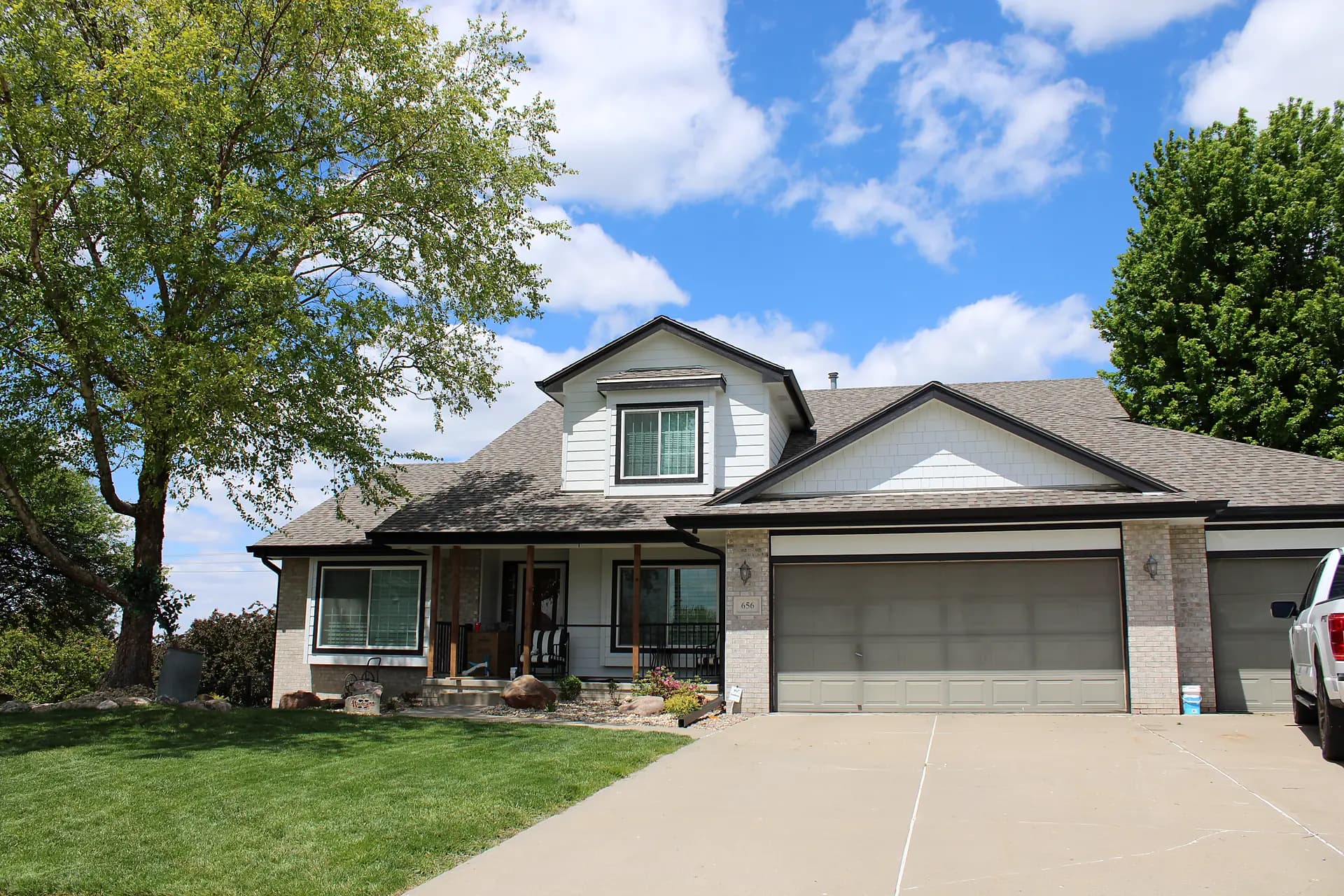







Our Approach
Stop Chimney Leaks At The Source
A chimney is a large masonry box cutting straight through your roof, and the only thing keeping water out of that joint is the flashing. When it is installed correctly, it quietly does its job for decades. When it is reused, patched with tar, or never tied into the brick, it becomes the first place your roof leaks.
Royalty repairs and replaces chimney flashing as part of the whole roof system, with step flashing woven into the shingles and counter flashing cut into the mortar joints. We also handle roof repair, full roof replacement, skylights, and gutters if you want to take care of everything at once.
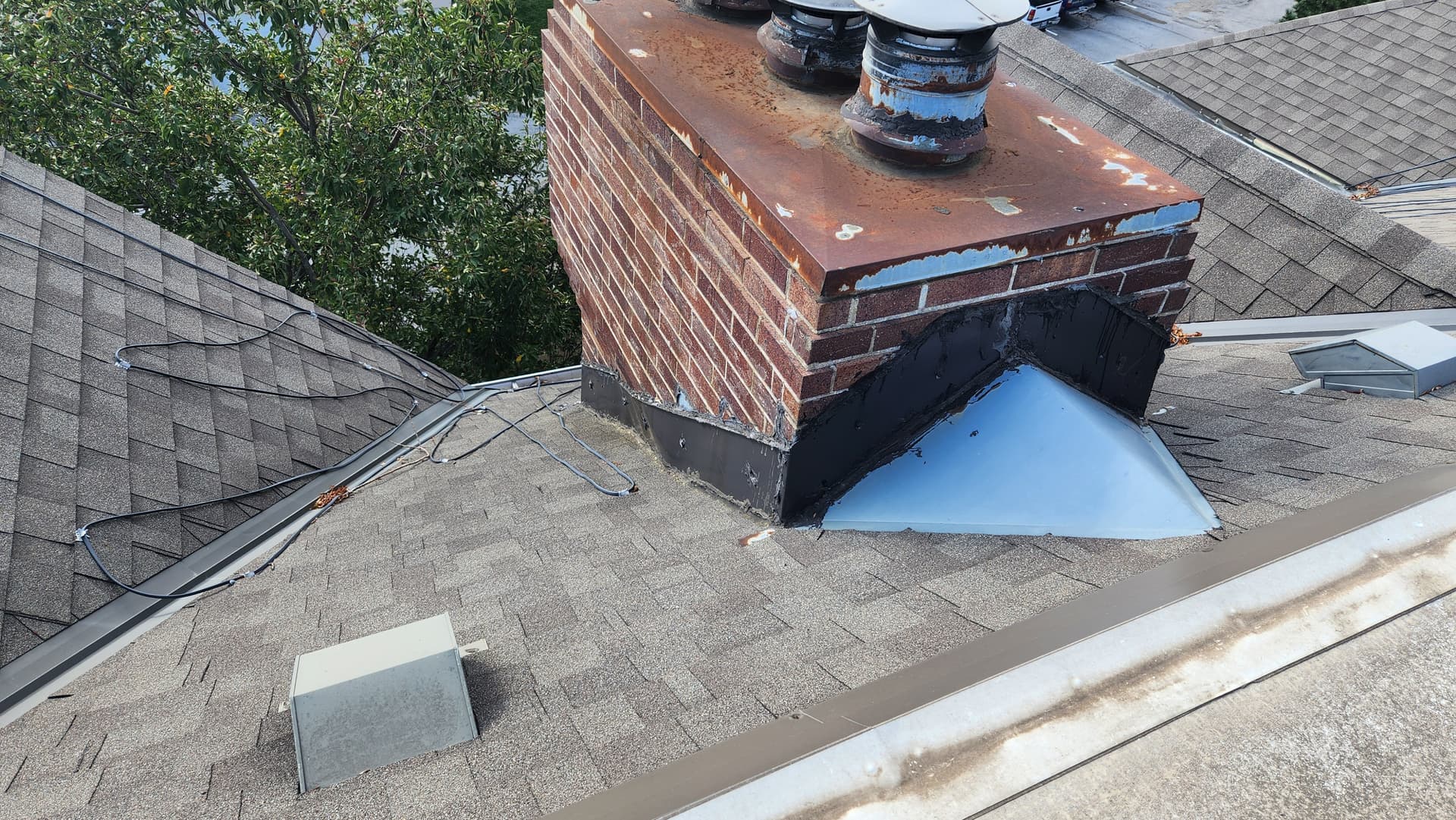
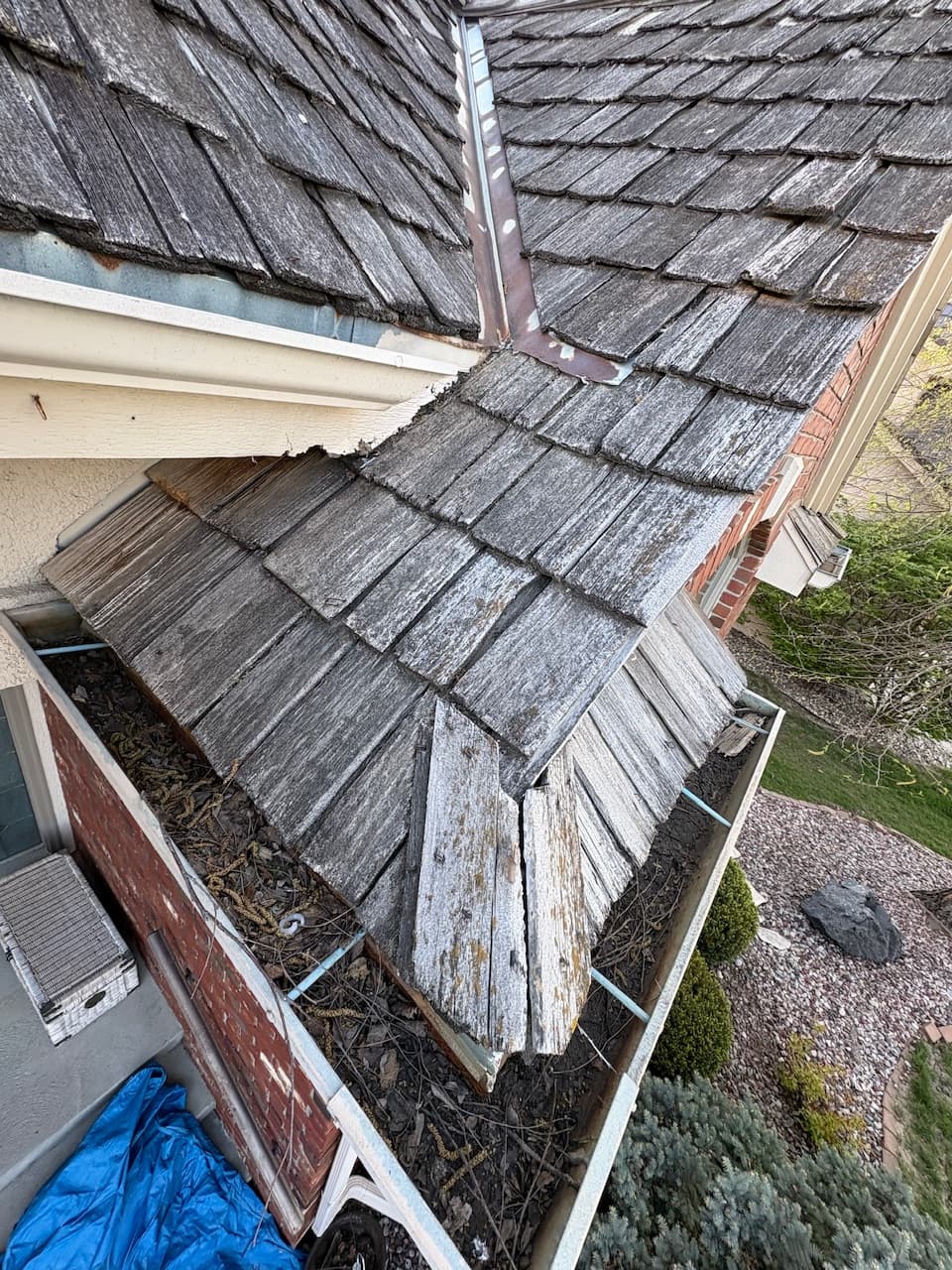
Examples of bad flashing
Why It Matters
Why Chimney Flashing Fails And How We Fix It Right
Chimney flashing is a two-part system. Step flashing runs up the sides of the chimney in individual pieces, each one layered with a course of shingles so water is carried down and away. Counter flashing is cut into the mortar joints of the brick and laps down over the step flashing, sealing the top edge. When both layers are installed correctly, water has no path in. When either one is missing, reused, or replaced with a bead of caulk, the chimney becomes the weak point of the entire roof.
The most common problem we find is a shortcut from a previous roof job. Old flashing gets bent back into place under new shingles, or the counter flashing gets smeared over with roofing tar rather than being properly reglet into the brick. That sealant can look fine for a season or two, but Nebraska freeze-thaw cycles crack it quickly, and water starts running behind the metal and into the roof deck where you cannot see it.
How Our Repair Process Works
Every project starts with a free inspection. We check the flashing, the shingles around the chimney, the mortar joints, the crown, and the cap, and we look in the attic when we can to trace where water is actually getting in. You get an honest recommendation on whether the flashing can be repaired or needs to be replaced, and we will point out any masonry issues contributing to the leak.
On repair day, our crew removes the surrounding shingles and old flashing, installs new step flashing woven into each shingle course, and cuts new counter flashing into the mortar joints. Larger chimneys get a cricket behind them to divert water around the back. We reinstall the shingles, clean up, and make sure the whole joint sheds water the way it should. Chimney flashing pairs naturally with roof repair and full roof replacement projects.
The Process
What To Expect When You Work With Us
Free Inspection
We check the flashing, shingles, mortar, crown, and cap to find exactly where water is getting in.
Honest Recommendation
You get a clear, itemized plan and quote. No pressure to replace what can be properly repaired.
Step And Counter Flashing
We weave new step flashing into the shingles and cut counter flashing into the mortar joints.
Cleanup And Walkthrough
We reinstall the shingles, remove all debris, and walk you through the finished work.
Know What to Look For
Signs Your Chimney Flashing Needs Repair
Water Stains On The Ceiling Or Wall Near The Chimney
Brown rings on the drywall beside the fireplace or in the attic around the chimney chase are the most common sign that the flashing has failed. The leak often shows up well away from the actual entry point.
Rusted, Bent, Or Loose Flashing
Flashing that has rusted through, lifted away from the brick, or been bent by wind and ice can no longer shed water. Once the metal separates from the chimney, every rainstorm finds the gap.
Tar And Caulk Patches Around The Base
Heavy roofing tar or caulk smeared around a chimney is a sign someone has already tried a quick fix. Sealant dries out, cracks, and pulls away within a few Nebraska winters, and it often hides a bigger problem underneath.
Crumbling Mortar Where The Flashing Meets The Brick
Counter flashing is set into the mortar joints. When that mortar cracks or falls out, the flashing loosens and water runs straight down behind it into the roof deck.
Damp Or Musty Smell In The Attic
A slow chimney leak can soak insulation and framing for months before a stain ever appears on a ceiling. A musty smell or dark wood around the chimney chase in the attic is worth a closer look.
Damage After A Hail Or Wind Storm
Hail dents and wind can loosen flashing and crack chimney caps and crowns. Storm damage to chimney flashing is frequently covered under the same insurance claim as the rest of the roof.
Local Knowledge
What Omaha Homeowners Should Know About Chimney Flashing
Omaha has a lot of older homes with brick chimneys, especially in established neighborhoods like Dundee, Benson, and Florence. Many of those chimneys have been through several roof replacements, and every one of those jobs was a chance for the flashing to be reused or patched instead of replaced.
Nebraska winters are especially hard on chimneys. Snow piles up on the uphill side, ice dams form against the brick, and repeated freeze-thaw cycles crack mortar and sealant. A chimney that stays dry all summer can start leaking the first time snow melts against it.
If your roof is due for replacement, that is the right time to replace the chimney flashing too. Royalty installs new step and counter flashing on every chimney as part of a roof replacement, and we inspect chimneys during every storm damage inspection so hail and wind damage makes it into your claim.
Schedule a Free Inspection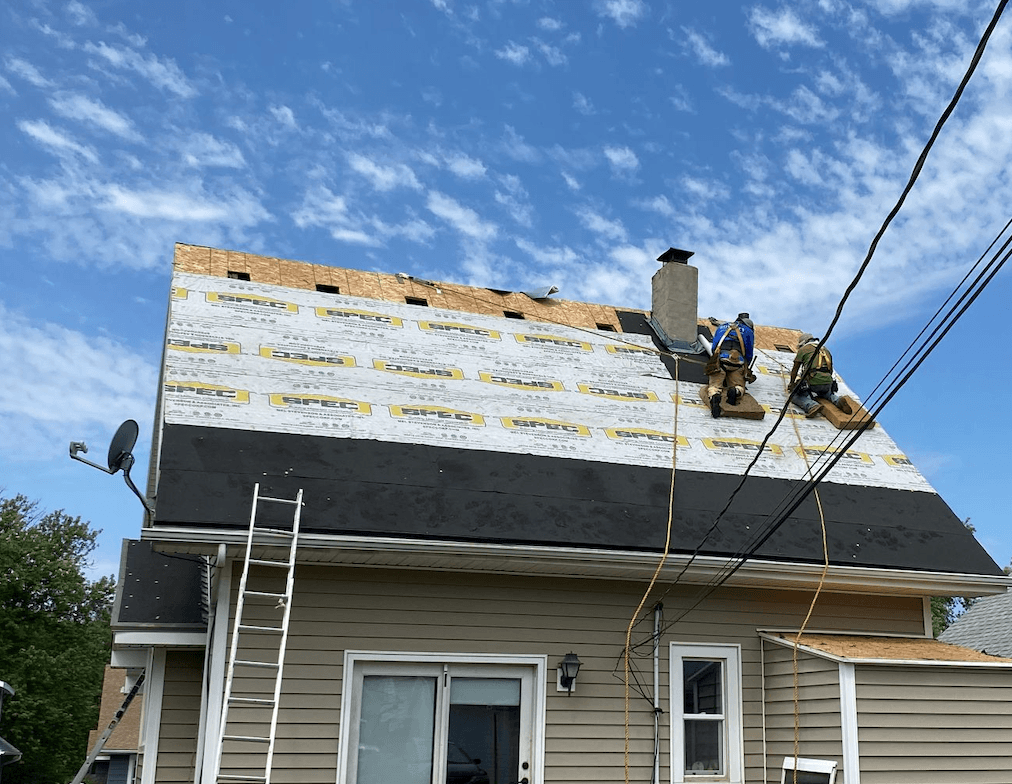
Royalty Roofing took care of us after the big windstorm last August and I could not be happier with their work. AJ was always accessible and worked directly with our insurance company to ensure we got our claim paid fully.
Brian B.
My roof needed a complete replacement due to hail damage. Royalty responded immediately and made the whole process seamless. The roof, skylights, and gutters look amazing. Highly recommend their services.
Natalie V.
So glad I decided to work with Royalty Roofing. Nick went to bat for me with insurance. They installed a new roof, siding and gutters and the house looks incredible. Extremely fast and affordable.
Tyson R.
Questions
Frequently Asked Questions
Most chimney leaks come from the flashing, not the chimney itself. Step flashing that was reused, sealed with tar instead of properly installed, or never tied into the mortar joints will let water run behind it and into the roof deck. Cracked chimney crowns, missing caps, and deteriorated mortar can also let water in, and we check all of them during an inspection.
It depends on the condition of the metal and how it was installed. Minor issues like a loose section of counter flashing can sometimes be re-secured and re-sealed. If the flashing is rusted through, was installed incorrectly, or has been patched repeatedly with tar, replacing it is the only reliable fix. We will tell you honestly which one your chimney needs.
Step flashing is a series of L-shaped metal pieces woven in with each course of shingles along the sides of the chimney. Counter flashing is cut into the mortar joints of the brick and laps down over the step flashing. Together they create a two-layer system that sheds water off the chimney and onto the roof.
Flashing damaged by a covered event like hail or wind is usually included in a roof claim. Leaks caused by age or a poor original installation are typically considered maintenance and are not covered. Royalty documents chimney damage as part of every storm inspection so it is not left out of your claim.
Yes. Chimney flashing is tied directly into the surrounding shingles, so a roof replacement is the ideal time to install new step and counter flashing. Reusing old flashing on a new roof is one of the most common reasons a brand new roof leaks.
Most chimney flashing repairs and replacements are completed in a single day, weather permitting. Larger chimneys or jobs that also need mortar or crown work may take longer, and we will let you know the timeline after your inspection.
Yes. We offer financing options for qualifying projects so you can take care of chimney flashing on its own or bundle it with a roof replacement. Ask your project manager about available financing.
Service Area
Serving the Greater Omaha Metro
Explore Our Services
500+ Google Reviews
"AJ worked tirelessly with three different claims adjusters and finally got them to do the right thing for us. He is a top-notch professional and his team did a great job on our house."
-- Brian B., Omaha NE