

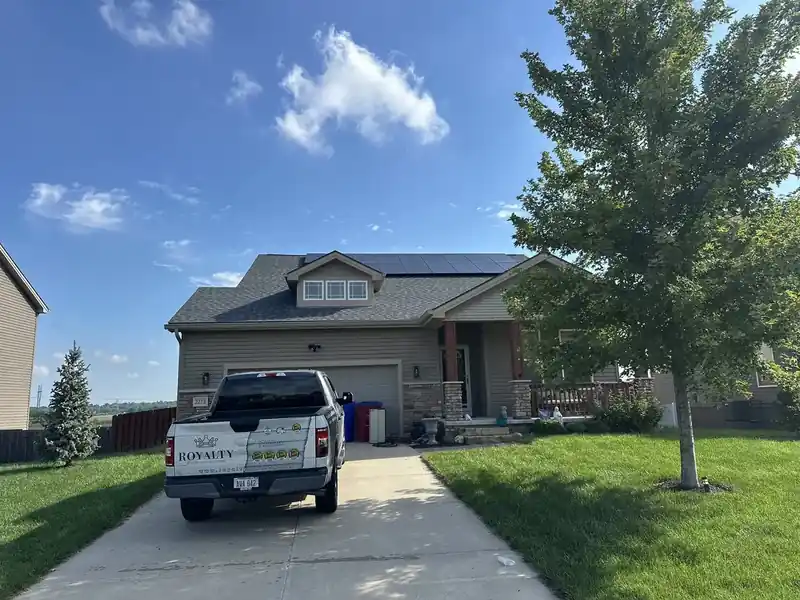
Thinking about adding solar panels to your Omaha home? Before the first panel goes up, your roof needs to be ready. Here is what homeowners should evaluate first.
Solar has moved from a niche upgrade to a mainstream option for Omaha homeowners, and interest climbs every summer as cooling bills rise. But there is a step that too many homeowners skip in their excitement to go green: making sure the roof underneath those panels is actually ready to carry them for the next 25 years. A solar array is only as reliable as the surface it is bolted to, and retrofitting panels onto a failing roof is one of the most expensive mistakes you can make. This guide walks through what roof readiness really means before you sign a solar contract.
Why Roof Condition Comes First
A modern solar array is designed to last 25 to 30 years. Asphalt shingle roofs, the most common type in the Omaha metro, typically last 20 to 25 years depending on the product and how well they were installed. If your roof is already 12 or 15 years old, installing solar on top of it guarantees a problem: the panels will outlive the shingles, and when the roof needs replacement you will have to pay a solar company to remove and reinstall the entire array. That removal-and-reinstallation cost can run into the thousands, completely separate from the roofing work itself.
The smart sequence is to evaluate, and if necessary replace, your roof before the panels go up. When both systems start their life at the same time, they age together and you avoid the costly middle-of-life teardown. That is why any reputable solar installer will ask about the age and condition of your roof before they talk about panel counts.
Assessing Your Roof's Structure and Age
Start with the paperwork. If you know when the roof was last replaced, you already have the single most useful data point. A roof under five years old is almost always a good candidate. A roof over 15 years old should be inspected carefully and, in most cases, replaced before solar. For anything in between, a professional inspection is the deciding factor.
Structure matters as much as age. Solar panels add roughly two to four pounds per square foot, which most modern trusses handle without issue, but older homes, homes with layered roofs, or homes with prior storm damage should be evaluated by a professional to confirm the framing can carry the additional load safely. An inspector will also look at the decking beneath the shingles, since panels are anchored into that structural layer.
Roof Orientation, Pitch, and Shading
Not every roof plane is equally productive. In the northern hemisphere, south-facing surfaces capture the most sunlight, with east and west facing planes producing respectable but lower output. The pitch of your roof influences the ideal mounting angle, and a good installer models all of this before quoting production numbers.
Shading is the quiet killer of solar performance. A mature tree, a tall chimney, or a neighboring structure that shades panels for part of the day can dramatically cut output. Walk your roof line in the morning and afternoon and note where shadows fall. Some of these issues can be solved with panel placement or trimming; others simply reduce how much of your roof is viable.
Material Choices That Work Well With Solar
Standard architectural asphalt shingles are the easiest and most affordable surface for solar mounting, which is part of why they remain so common across Nebraska. Standing seam metal roofs are also excellent because panels can clamp directly to the seams without penetrating the roof surface at all. Tile and slate are workable but require specialized mounting hardware and more labor.
- Architectural asphalt shingles: affordable, easy to mount, widely available.
- Standing seam metal: clamp-on mounting means no penetrations and a very long service life.
- Tile and slate: possible but require specialty hardware and experienced installers.
- Aging or damaged roofs of any material: replace before installing solar.
Coordinating Roofing and Solar Work
The cleanest projects happen when the roofing contractor and the solar installer communicate. If you are replacing the roof first, tell your roofer that solar is coming so they can note rafter locations, use quality underlayment, and leave you with as-built documentation. Some homeowners even have the roofer install mounting-friendly details in advance. Doing the roof and solar within the same season keeps warranties aligned and avoids the disruption of two separate teardowns.
At Royalty Roofing, we regularly inspect roofs for homeowners who are exploring solar and give an honest assessment: whether the roof has years of life left, or whether replacing it first will save money in the long run. An unbiased roofing opinion, separate from the solar sale, protects your investment.
Your Next Step
If solar is on your radar for the next year or two, the best first move is a professional roof inspection. Knowing your roof's true age, structural condition, and remaining lifespan turns a guessing game into a clear plan, and it ensures the panels you install will be supported by a roof that lasts just as long. Reach out to schedule a free roof evaluation before you commit to a solar contract, and start your project on a solid foundation.
Our Services
As a 7-time Best of Omaha winner, Royalty Roofing and Siding is among the most trusted roofing companies in Omaha, providing expert roof repair in Omaha, James Hardie siding installation, energy-efficient replacement windows, and commercial roofing in Omaha throughout the metro area. Explore our full range of services:
Serving Omaha, Bellevue, Papillion, La Vista, Gretna, Elkhorn, and surrounding Nebraska communities. Request your free estimate today!


