

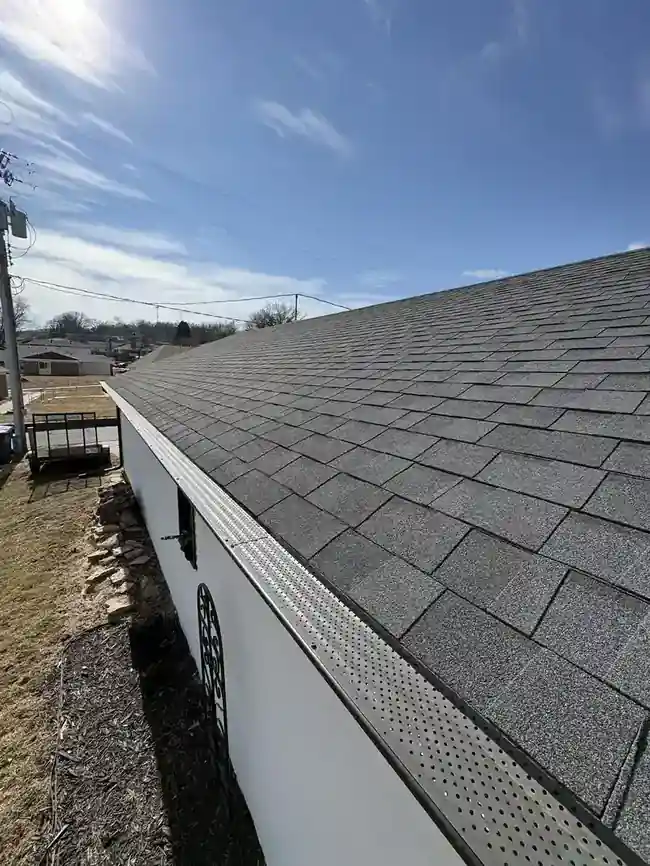
Finding granules in your gutters or bald patches on your shingles? Learn what granule loss means, what causes it, and when it signals your roof needs attention.
If you have noticed sandy grit collecting in your gutters, at the base of your downspouts, or bald-looking patches on your shingles, you are seeing granule loss, and it is one of the most telling signs of your roof's health. Those tiny granules are not cosmetic; they do essential work protecting your roof. Understanding why they come loose, when it is normal, and when it signals a problem helps you know whether your roof needs attention. Here is what granule loss is really telling you.
What the Granules Actually Do
The colored granules on asphalt shingles are more than decoration. They shield the underlying asphalt from the sun's ultraviolet rays, which otherwise dry out and degrade the shingle over time. They also add fire resistance and help protect against impact and weather. As granules wear away, the asphalt beneath is increasingly exposed, and the shingle ages and deteriorates much faster. In short, the granules are the shingle's sunscreen and armor.
When Granule Loss Is Normal
Not all granule loss is cause for alarm. Brand-new roofs shed loose granules left over from manufacturing, which is completely normal and tapers off quickly. A modest amount of granule loss also occurs gradually over a roof's life as part of natural weathering. Finding a small amount of grit after a new installation or seeing gentle wear on an older roof is expected. The concern is heavy or sudden loss, especially on a roof that is not old.
- Granules protect shingles from UV, fire, and impact.
- Light shedding on a new roof is normal.
- Gradual wear over many years is expected.
- Heavy or sudden loss signals a problem worth inspecting.
What Causes Excessive Loss
Several factors accelerate granule loss beyond the normal rate. Hail and severe storms knock granules loose on impact, which is why heavy shedding after a storm can indicate damage. Age is another driver, as shingles naturally give up more granules near the end of their life. Physical wear from foot traffic, overhanging branches scraping the surface, and poor attic ventilation cooking the shingles from below can all speed up the process.
Reading the Signs on Your Roof
Bald spots where the darker asphalt shows through, granules piling up at the bottom of downspouts, and an uneven, patchy appearance are all signs worth investigating. If heavy granule loss appears suddenly after a hailstorm, it may point to storm damage that could be covered by insurance. If it accompanies a roof that is already aging, it may be one more indicator that replacement is approaching. Either way, the pattern tells a story a professional can read.
What to Do About It
The right response depends on the cause and extent. Light, normal shedding needs nothing more than awareness. Heavy loss calls for a professional inspection to determine whether the roof has storm damage, is nearing the end of its life, or has a ventilation issue accelerating wear. Catching the cause early can mean a timely repair, an insurance claim after a storm, or simply a clear timeline for planning a future replacement rather than being caught off guard.
Get Your Granule Loss Checked
Granule loss is your roof communicating with you, and it is worth listening. Royalty Roofing can inspect your shingles and gutters, determine whether the loss is normal aging or a sign of damage, and recommend the right course of action. If you have spotted grit in your gutters or bare patches on your roof, contact us for a free inspection and find out exactly what your shingles are trying to tell you.
Our Services
As a 7-time Best of Omaha winner, Royalty Roofing and Siding is among the most trusted roofing companies in Omaha, providing expert roof repair in Omaha, James Hardie siding installation, energy-efficient replacement windows, and commercial roofing in Omaha throughout the metro area. Explore our full range of services:
Serving Omaha, Bellevue, Papillion, La Vista, Gretna, Elkhorn, and surrounding Nebraska communities. Request your free estimate today!


